Smart glasses are making a huge comeback in 2025 — and they’re not just for tech enthusiasts. Thanks to sleeker designs, powerful features, and growing accessibility, these next-gen wearables are proving useful for everyday people, including those with vision challenges.
In this post, we’ll explore what makes smart glasses different from their first generation, how they can enhance daily life, and the surprising benefits they bring for people with sight deficiencies.
Disclaimer: As an Amazon affiliate I earn a small commission at no extra cost to you. Thank you for supporting my small business.
What Are Smart Glasses?
Think of smart glasses as the natural evolution of your smartphone — but hands-free and built into eyewear. They combine traditional lenses with augmented reality (AR), voice commands, and AI-powered features.
With brands like Ray-Ban Meta, Vuzix, and others leading the charge, today’s smart glasses look more like stylish eyewear than clunky gadgets.
Everyday Benefits for Everyone
Smart glasses offer features that can make life easier for anyone, not just tech lovers:
Hands-Free Communication – Take calls, send messages, or listen to music without pulling out your phone.
Navigation on the Go – Real-time maps and turn-by-turn directions projected into your line of sight.
Content Capture – Built-in cameras make it effortless to snap photos or record videos.
Productivity Boost – Voice-activated reminders, notifications, and translations at eye level.
These are not just flashy add-ons — they’re real, practical upgrades to how we move through the day.
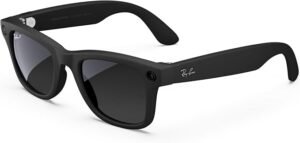
Combines fashion and functionality with high-res camera, music playback, AI-powered features like translations and song identification — often featured in “futuristic” lists and even Oprah’s Must-Haves for 2024
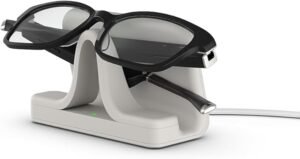
Sleek audio-glasses with Alexa built right in. Features include open-ear audio, integrated speaker drivers, and more comfort-focused design. Ideal for voice control without reaching for your phone
How Smart Glasses Help People With Sight Deficiencies
One of the most exciting breakthroughs is how smart glasses can support people who live with vision challenges:
Text-to-Speech Reading – Glasses can scan menus, signs, or documents and read them aloud in real time.
Object Recognition – AI can identify objects, colors, or even people in your surroundings.
Navigation Assistance – Smart glasses can guide wearers safely through unfamiliar areas using haptic or voice prompts.
Magnification Tools – Adjustable zoom helps those with low vision see details more clearly.
Contrast & Lighting Adjustments – Glasses can enhance contrast in dim or bright environments, making it easier to see.
This means smart glasses aren’t just a convenience — they can truly bridge accessibility gaps for millions of people.
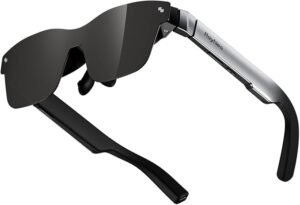
High-end micro‑OLED display for immersive AR experiences — think a 201″ virtual screen with stunning color precision and low blue‑light tech to reduce eye strain
The Future of Smart Glasses
The smart glasses market is projected to grow rapidly, with experts predicting adoption could quadruple by 2026. As fashion partnerships and accessibility features expand, these devices are well on their way to becoming as common as smartphones or smartwatches.
For people with and without sight deficiencies, smart glasses represent a future where technology blends seamlessly into everyday life — making us more connected, informed, and independent.